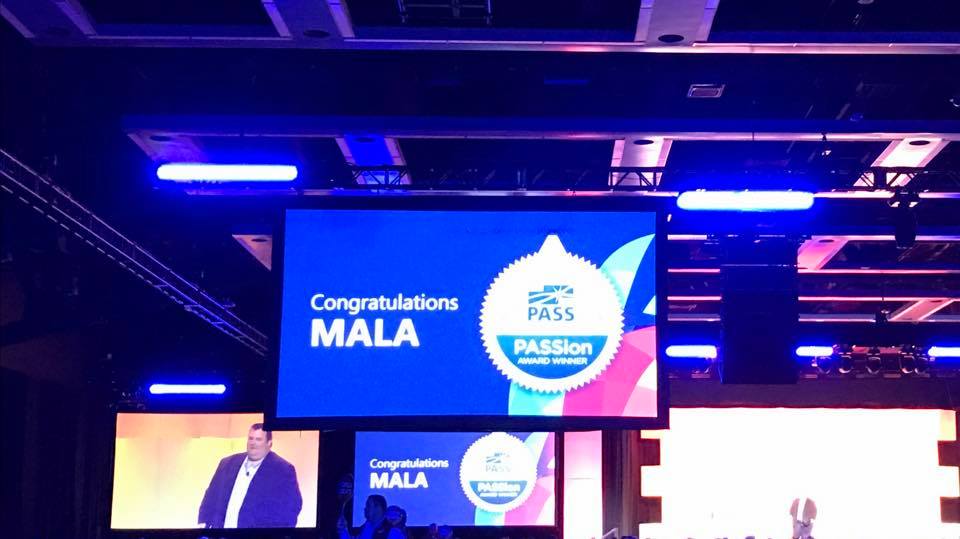
Vajrasara – An interview with Lashana Lewis – Part 2

In part 1 of this interview we talked at length about what it took for Lashana to make it into tech, her recognition by the then President to a huge audience, and related. In the second part I asked her some questions regarding her advice for women in tech and various situations we have to handle.

Mala:         What advice would you have for young women of color or minorities who want to get started in tech? Or if you had to do it differently, how would that be? As a younger person?

Lashana:              I would tell myself, “You know more than you think you know.” I always went into any tech situation expecting that I had a lot to learn and it would be a really hard road and my knowledge level was really low. It’s like, a lot of it is about whether or not you have the spirit and the audacity to push forward even when you might not know the answer to something. Or when something gets difficult.

Mala: How does diversity add value to a technical team? In other words what advice would you have for companies to hire diverse people on their tech teams?

Lashana: What I found out is people who are good at troubleshooting are usually the people that I want on my team because I need you to think a different way about how to solve a problem than what I’m thinking. If I knew the answer I would not need any help and the problem wouldn’t exist right now. A lot of women and people of color and oppressed minorities in general have to find a different way to do something anyway – that makes them really good at out-of-the-box thinking. That is one reason why diverse teams can be so good at solving problems.

Their troubleshooting abilities are already there. Companies can bring that to the table and that is way worth more than what they actually think it is. A lot of technical stuff can be learned. Every job has to train you technically because every job has a slightly different version of whatever program that they’re using. I don’t think I’ve ever had one job in my 26 years of working jobs where I use the exact same version of a program from one job to another. I always had to retrain myself and it took three to six months sometimes before I could actually get to the level that the rest of the employees are.

<<I was really impressed by her line that women and people of color have to do it differently anyways. I have seen this validated multiple times. One of my ex bosses was once trying to pick someone on his team to do a presentation for senior management..he picked me over lot of better presenters because he thought I had the ‘best poker face’ while facing serious situations. Truth is am not poker faced at all. But I learned to be that way in some situations because I had to face immigration multiple times..and anyone who has done that knows you keep any kind of expressions or emotions at bay. I’ve also been at multiple places where women are considered good at multi tasking over men. We learn that by multi tasking at home – most of us have to.>>

Mala:       When does a person make a call to move on from a job/situation? This is something that I have found challenging myself. Sometimes you have to live it through things and speak up/try to change and sometimes you have to move on from a gig because you think you’re no longer going to be seen there? Obviously I need a job, I will keep going. Every place I go, I encounter the same kind of stereotyping and bias and all of that.

Lashana:              I faced that challenge as well. I always tell people, “Look, I don’t know what your parents’ situation is. If you have kids to feed and other things to take care of. I don’t want to be that person telling you to leave the job and then you’re stuck financially.” But for those that can do a little bit more, there have been suggestions to make stealth job searches. If you can do that, that’s great. There are recruiters that will keep your information secret and they’ll make sure that the employer that you’re with right now doesn’t know that you’re job searching. But for me, when I knew that I needed to leave, and I tell this to everyone, it’s like, “You already probably should been left three to six months before you actually, you did.”

Mala:                     Right, I felt that all the time.

Lashana:              Yeah. It’s always going to be scary. Instead of expecting it to be like, “Oh, I’ll leave when it feels right and everything’s settled down” … It’s always going to be scary because nobody wants to leave a place that they literally spent most of their waking hour at for most of the week. You’re adjusted to it. You know where you sit, you know what the temperature of the room is, you know all the good spots to eat and all of that stuff. Nobody wants to leave the comfort zone. You have to get over the expectation for it to feel okay. The line to remember though to start that process is ‘If you are not being respected, it’s not you.‘It’s not, “Keep your head down.” It’s not, “Don’t ruffle the waters.” If you’re not being respected as an adult, then you need to make whatever plans you need to make to leave. I think that’s the one thing that I try to get through is that people feel like, “Well, maybe I’m just being pessimistic. Or maybe I’m just being too picky.” I’m like, “No, you’re basically saying that you need to be respected. If they’re not respecting you, then yes, that’s not a place for you.” How soon you leave depends on other variables, but it’s not you. You’re not going crazy. You’re not imagining things, it is happening.

<<Am not sure I can think of a better/simpler bottomline to make the decision to leave. Lack of Respect. And remembering that it is not me, or that it is okay because am used to it. The line to get out of our comfort zones is invaluable, I could hear it any number of times.>>

Mala:                     So I think that’s all I had on my list of questions. Would you have any questions for me regarding PASS, regarding anything else?

Lashana:              I know that PASS is nationwide. I’m guessing it’s also international?

Mala:                     Yeah, we are an international data community. We started nationwide, but right now we’re across 58 countries. The conference that you’re going to be at has attendees from around 35-40 different countries in the world.

Lashana:              Oh wow.

Mala:                     Yes. We have user groups/chapters, we also have special interest groups. One of them is the Women-in-technology group – headed up by Kathi Kellenberger (who reached out to you), and Rie Irish. Rie and Kathi also set up the women-in-technology happy hour and the lunch hour where you’re going to be speaking at. We also usually have an LGBT happy hour, karaoke parties (which was also started by Kathi several years ago) and many parties thrown by vendors in the evenings. It’s a lot of fun. Its our year 21 this year. Almost like a family reunion for so many of us since we’ve been part of it for a very long time. We love to show it off to new people and most I’ve known feel very much at home. It is a really unique community, lots of very caring people.

Lashana:              Oh wow. So yes, that’s fantastic. Every time I run across someone that’s, and it’s mostly database professionals, am I correct?

Mala:       Yes, we started with database people around Microsoft SQL Server, so the original expansion of acronym PASS was Professional Association of SQL Server. But right now, because of the way the industry itself has changed, they’ve gotten away from that association and haven’t come up with a very good alternate name yet. We still are PASS by most of us. We are people who primarily work on the Microsoft data platform that is also expanding into other database technologies as well as open source.

Lashana:              Oh, okay. Awesome. But yes, I tell any database professional that I meet. I actually, and this may be something for a later time, but there is a black women’s tech summit that’s starting to formulate in Philadelphia.

It’s called HUE, H-U-E. It is black women and women of color that are somewhere within the tech realm. They’re in their second year. I got to them in the second year and I actually went to the conference. They asked me to speak on a panel about being a woman in tech and how that is. But they’re growing. So if it’s something that PASS maybe wants to put on their radar as it grows, it’s a fantastic opportunity. They ended up getting some really big sponsors for the second year. So the only thing I can see is that it’s just going to keep growing.

Mala:                     That’s awesome.

Lashana:              I had never been in a conference with literally 200 women of color, all in tech.

Mala:                     Oh wow. You’re allowed to attend even as a non black person? Like a brown person and such?

Lashana:              Absolutely.

Mala:                     Oh cool. Yeah, I would definitely keep it on my calendar. So is it about database technology? Is it about any kind of tech?

Lashana:              Any kind of tech. So you’ve got some cybersecurity people, you’ve got some SQL database people. Because I actually ran into someone who works in databases and I told her about PASS and she said, “I’ve never heard of it.” I said, “You have to check them out.” So I went on ahead and gave her the link and told her that I would be at the summit. But yeah, she was super interested in it because she said as a woman in tech that works with databases, she doesn’t really have a group. I said, “The women in technology group is virtual from what I understand, so it doesn’t matter where you are. You can just join in and have other women to talk to.” So hopefully she did go ahead and sign up. She sounded really excited about it. But I was just thinking that could be a great platform.

Mala:                     If you have flyers or anything like that, I’d be happy to promote it among our community.

Lashana:              Absolutely. I will absolutely do that. Let’s see, I’m trying to think if I have any other questions. I think that’s it. Thanks you much for this conversation. This was awesome.

Mala:                     Yeah. Same here. Thank you. I appreciate it.

Thank you Lashana, for your time and many valuable insights.
We really look forward to having you at PASS and introducing our great community to you.

Readers – Lashana Lewis can be reached on twitter here and her linkedin profile is here

Thanks to PASS for helping me set this up and to everyone for reading!!

Vajrasara – an interview with Lashana Lewis – Part 1

I have been impressed by profiles of women invited to the annual Women-in-Technology luncheon at the PASS summit in the recent past. When the announcement comes out, I normally look up who the person is and read about them. When PASS offered an opportunity, as an official blogger at the summit this year – to interview Lashana Lewis, this year’s invitee to the WIT session at the summit – I jumped at the chance.

I must state here that I am really not that easily overwhelmed by many challenges people have at work, especially women, in this country. I try to be kind and compassionate whenever I can – but many problems are pale in comparison to what I have been through personally, coming from a highly patriarchal society in a third world country. But Lashana’s story and her character that came through were bright as a diamond even to me – so much that the term that came to mind was the sanskrit word ‘Vajrasara’, which essentially means ‘strong and bright as a diamond’.

Below is my interview with her. This was fairly long – I’ve made it into a two part blog post – the first part talks of her history and how she got here, and the second part is advice related to diversity,survival as a woman of color in tech and so on. I considered uploading the audio first for people to listen – but there are so many links to other things and valuable information in here – plus it flows better as a story if I write it.

Mala:         Can you go give me a brief history of how you got here?

Lashana:     Sure. I’m actually, to some folks’s surprise, a tech geek for a really long time – ever since I was a kid. My favorite story as a kid is that my mother would have me take apart things and put things back together. I was a curious kid. One day I wanted to take apart a brooch that she received from her mother from a long time ago. She said “Don’t mess with that. I know you want to fix it but don’t mess with it. We’ll make an agreement of what you can and can’t take apart and try to fix.” She would allow me to break the toaster apart and put it back together. That was our agreement – I had to ask her for permission before taking things apart.

I learned from that – the things that get you in trouble are the things that you end up being really good at.

Mala:                     Yeah. that is so true.

Lashana:              Yeah. I had a chance to purchase a computer through a program that I was a part of in high school. When that broke I went and I found parts, put it together and repaired it. My teacher saw that I was really good with not only that, but also computer programming. So he suggested that I go into computer science. So I went to Michigan tech university for about three and a half years on a scholarship for minorities in engineering. I had some trouble. I faced some issues then. There were probably a handful of people of color. Two people were Indian.

It was me and them the rest of them were white guys. So basically we just had a really tough time trying to get through and even get through some of the curriculum. I ended up leaving after three and a half years because of two things. One, because of that toughness, but two, because I ran out of scholarship money. Back then the Pell Grant didn’t pay for summer and I went to school 17 hours away from my home and I grew up in the projects of East St Louis, Illinois – which is an economically deprived area. I didn’t have the money to keep going back and forth.

I stayed there for literally three and a half consecutive years. Then I came home and tried to find a job. I couldn’t find one in spite of the fact that I had programming skills and most of the things people were asking for were data entry and very basic things. I was a computer lab assistant when I was in college. What they were asking me to do was very easy. I was even designing websites, and this is back in 1998 before the internet was this thing that everybody had. So couldn’t find a job. I became a van driver for an after school program. That was the only job I could find. I did that for about six years.

<<Lots of us do various other jobs before ending up in IT. But that is somewhat different from being fully qualified for an IT job and not being able to get one. In my time the only people who landed IT jobs were those who went to school for an engineering degree – so my first job was doing data processing and various miscellaneous tasks at a textile shop that almost cost me a lung because of the pollution. But she had to drive a bus for six years before she even found something in IT. I was mind boggled to hear that>>.

Lashana:              Yeah. I did that for about six years. In the meantime I made friends with all the IT guys. I was able to help during the whole 2000, Y2K bug thing when everybody was freaking out. I was able to update the bios for different machines. I just kept my skills up. But at the same time I still wanted to not do these side jobs after the van driving, I was a customer service agent – I could never get into tech.

I had an opportunity at one of the places I was working, which was a university, to take some classes and refresh some of my knowledge for free. So in the middle of two programming classes both professors didn’t even really know each other that much, but they both gave me the same suggestion to be a part of this program called LaunchCode. It was very new. Not many people had heard of it. It wasn’t even a year old yet. I ignored them. Then I literally sat myself down and said, “Your teachers are telling you to go to this program, to stop doing what you’re doing now. Finish your class but go to this program.” I ended up going. I hadn’t finished my degree at that time. I had the opportunity to do it for free – but they were urging me to do this Launch Code program, so I did it.

I started in June of 2014 right after school had ended for that semester. By August of 2014 I had an interview because basically one of the facilitators with LaunchCode saw that I knew how to program already and she said, “Well, do you need help with anything?” I said, “No, I just can’t find a job in IT.” She set me up with an interview. I drove out to MasterCard, which is right here in O’Fallon, Missouri, maybe about 40 minutes outside of St Louis .I interviewed and was hired that next month. In September I started my apprenticeship. Usually it’s a three month apprenticeship. One day my boss brought me to the side – I thought I was in trouble and he said, “No, no, no. I want to hire you full time. “

He gave me my first real IT job and by November I was a full time employee at MasterCard. I was a systems engineer. I worked with the Windows team. I trained another team in Chennai, India. Then from there I ended up switching over to software engineering so I could actually use the programming skills that I had to learn 10 years previously. I used those for about six months. A lot of people were bringing me in because one of the cool things that happened because I went through the launch code program . I was doing so well that it caught the eye of Barack Obama, the president at the time.

Mala:                     I saw how that picture on your twitter profile and I was like, “Oh my God, isn’t that cool?!”

Lashana:              It is cool. LaunchCode was trying to get some testimonial videos because it was very early program and they were trying to get people interested. It was a hot sweaty day – I stood in front of a camera and just blabbed for about 10 minutes. Then they filmed me in a couple of other places talking. Barack Obama got his eyes on it . Him and his economic policy advisor at the time – Byron Auguste, got together a program that would basically make grant money available to do other programs like Launch Code all across the nation. It was a $100 million grant opportunity for all of these different programs. Whenever the President announced these things, he tried to bring people related to the events. He asked me if I would come, through his assistants. It wasn’t him calling me up. I would’ve probably passed out. But he asked his assistants to come and contact me and get everything together. I went out to Washington DC and I sat and I listened to him talk about me. It just so happened that right when he was getting ready to do his speech, I was able to text my mother and tell her to turn on CSPAN and she said, “Okay.” At that moment my phone died. So I didn’t know what happened until after the whole entire thing. I finally got back to my hotel room, charged the phone and called home – my sister answered and I asked, “Where’s mom?” And she was like, “Don’t start talking again. Mom just stopped crying. She’s been watching this.”

Mala:                     That’s such a story, oh my God. Yeah.

Lashana:              “She’s been crying for like the last five hours so no, just stop.” I was like, “I didn’t do anything.” But yeah, that was a great thing. Obviously I took a picture with him. right after he gave the speech, which was fantastic. Because of all of that highlighting and because I was out there, people were like, “Well you have all these skills, why did it take you so long to get into the tech field? Didn’t you just go and apply?” I’m like, “Yes, of course I applied. I applied, I talked to people, I tried to make friends with people. It did’nt work – there was always something in the way.

<< I grabbed a bunch of tissues after this. It is an incredible moment when your loved ones get to see you succeeding. Also, the incredulousness people displayed when she explained how long it took for her to make it really struck a cord with me. I am faced with a lot of this on various fronts – starting from my personal life to various aspects. I try hard not to pose this kind of questions to people. Life is different depending on many things…never assume the opportunities you have in any regard are available to everyone else. Never take anything you have for granted>>.

Lashana:        I ended up talking a lot about diversity in tech and what the issues were for, particularly black women, getting into tech. But minorities in general. So from then I had two lives. In one life I was this IT engineer doing systems engineering and software engineering – I am behind a desk and not really talking to many people. Then suddenly I was called out to Washington DC to be interviewed by Tom Friedman of the New York Times to talk about what my life was like trying to get into IT. That got me into the more granular things, statistically and data wise – why is this happening? What is actually keeping people from having more women of color or people of color in general into these fields?

I started putting together some slides and I did one presentation at a conference called Lesbians Who Tech. During that presentation I talked about the digital divide. I talked about the racial dot map that’s out there, which a lot of people don’t know about. It’s basically a colored dot map for every person that responded on the US census. It actually is colorized depending on what ethnicity you identified as. It’s put onto a Google map so you can literally look anywhere in the United States and see what the racial density is of different areas. So I was starting to collect more and more information like that. So when I put together the presentation for data-driven diversity for pass wit, it really got me to looking at the statistics and trying to figure out and wonder why people weren’t aware of some of this information and how they could use it to make changes within their own company.

What I really got out of this part of the interview – in addition to personal inspiration from one woman of color to another – is how LaunchCode helped Lashana succeed. To me a lot of my visibility and success can be similarly attributed to my volunteering efforts with PASS – it gave me a platform to contribute something and to be seen as someone more than just a techie working a job, like so many others are. These associations matter and can work in very beneficial ways.

In the next part I will be discussing with Lashana on the importance of diversity in tech, hiring strategies, when to stay and when to leave decisions and so on..stay tuned..and thanks for reading!!

Graph Data – Basic Structure

In the last post I covered briefly the history around graph databases. In this one am going to look at the structure. There have been a lot of blog posts written up about structure of graph tables in SQL Server. I really like this series by my friend Niko Neugebauer.

The simplest way to understand a graph data model is that there are just two entities – Nodes, which is what we call Entities in the relational world, and Edges, which are what we call relationships. They are typically represented like below, with the circles standing for nodes, and the arrows for relationships. The emphasis, as we can see is on the bold arrows – because relationships are what graph data is about, with less emphasis on entities/nodes.

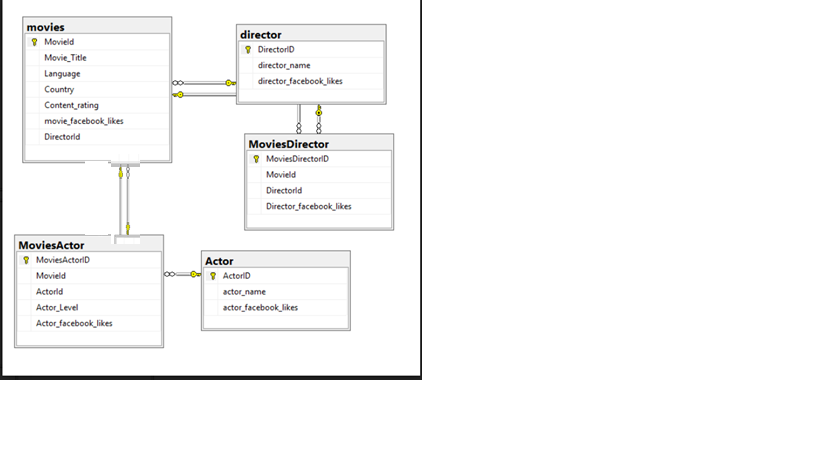
To illustrate with an example – I took the free movie dataset from IMDB and designed it the relational way. So, I have a few tables – movies, actors, directors and such, connected like below.

Relational Data Model

Why is this a good candidate for graph data?

1 It has more than one many-to-many relationship, with the candidate tables having significant amounts of data.
2 The nature of relationships are worth querying on – for example, how many directors are also actors, which actor has co starred with which actor in how many movies, what is the shortest way to reach one actor from another..and so on.

If I want to redesign this in graph model – the main thing to remember is that the concept of graph data is largely implemented as nosql, so there is no ANSI like standard to stick to. We’d have to make our own rules. At the designing stage, the main rule is ‘design around relationships.’ So, think in terms of the verbs ‘who produced what’, ‘who acted in what’, ‘who directed in what’. All of these make our edges, or arrows. Then we can see what connects those arrows – the two nodes, Person, and Movies. Those are our entities. So, my graph data model of the same database looks like below.

In the next post we can look at how to create sql graph tables and query on them with this model. Thanks for reading!

Graph Databases – Introduction

I have been looking into this feature and also into understanding graph data in general. I believe introduction of graph database feature in SQL Server has many advantages – although I also believe it is important to understand the background/origin/ and how it was done before. In this series I will start with the history and cover several ways it was done before we got to where we are now.

Origins of Graph Theory: The theory behind graph data is old and goes back what is popularly known as Konigsberg Bridge Problem. The problem has been narrated several times – in short it was about how to traverse a town with 4 land masses (2, but 4 if you include two banks of a river) connected by 7 bridges. A mathematician named Leonard Euler took it up and came up with a mathematical concept of ‘nodes'(land masses) ,’edges’ (the connections between nodes or bridges), and the number of ‘edges’ coming out of each node (degrees). Euler’s theory, put very simply, says if you have more than two nodes with odd degrees in a configuration then you cannot traverse the graph from one end to another. This laid the foundation for graph data and what we have now.

How is it different from relational data? : Every thing we do with graph data modeling and querying can be done in the relational world. But to classify data as graph data it has to be a certain way. Graph data has way more relationships than it does entities. I like to use the simple example of social media followers. I am an entity, for example, with 100 followers. My friend has 200 followers. Between us we have 50 friends in common. Those friends in turn have friends in common with me. And so on. If you have to model this in the relational world, the number of relationships will be too large and difficult to represent, let alone query on. This is the kind of problem that graph data modeling and querying helps us model and deal with.

What are some common examples of graph data? Graph data is all around us…some of the most common examples are Chart of Accounts, Organizational Charts, Transportation Systems (GPS), Bill of Materials and social media connections.

In the next post I can discuss some examples of data modeling with graph data, and what are the specific problems/algorithms we can solve by modeling it this way.

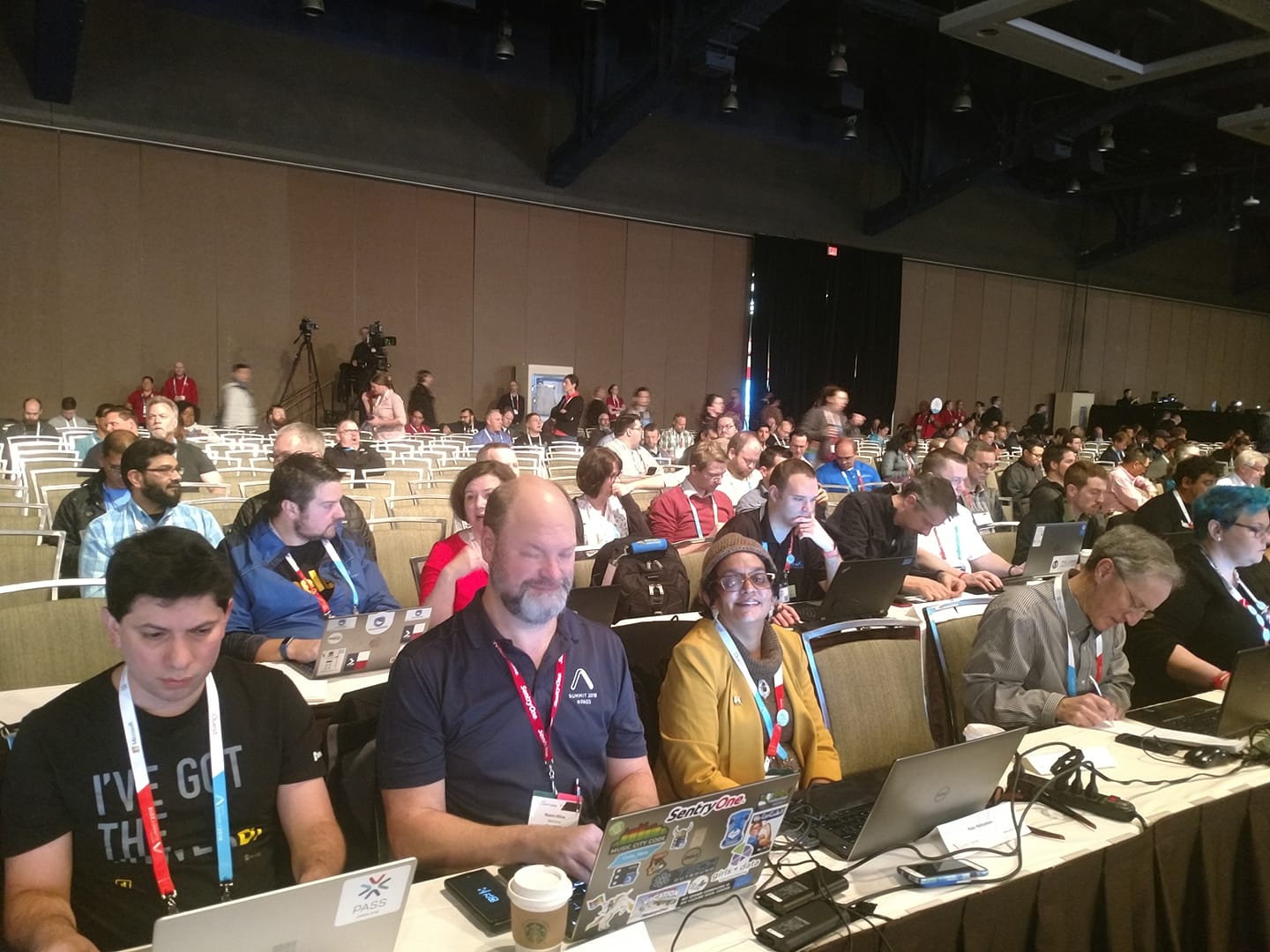
PASS Summit 2019 – Getting the most out of it

The session line up for PASS Summit 2019 was announced today...there are so many good sessions to go to..managing time and what we do with our limited time there is an important skill..to some extent. I’d say it is partly skill, and partly luck to get the most out of it. We can control the skill part, so let’s see how.

1 If I am sponsored by my job, I’d consider the top sessions that I can go to that would add value to what I do at work. So let us say Powershell is one of them – I would shortlist all the sessions on powershell and decide which ones would add most value to what am doing, and attend those. One of the key things i’ve learned here is that a beginner level session on something I know does not necessarily disqualify it. It may certainly not be the best place for me to learn – but some beginner sessions are very creatively done, and can often offer new insights into something I already know. It also depends on the speaker who is presenting – I know certain speakers whose sessions I will attend, no matter what, which brings me to the next point.

2 Check the schedule for my favorite speakers and what they are presenting on. There are too many this year but I try to go to as many as I possibly can.

3 If I have skills I need to or like to learn personally – I try to attend all those sessions too. I have an ongoing list of those and keep up as much as I can.

Two of the challenges I face every year are as below:

1 Session I want to go to cancelled, room is full, or is not as good as I expected – in all of these cases I go to the next one I planned to. (Always have a backup plan). It does not hurt at all though to just stand in hallway and talk to someone I’ve not seen in a long time. Or visit the exhibit hall, or the community zone. All of these activities are part of the summit.

2 I feel too tired to walk to the session I want to go to – this is not at all uncommon while doing back-to-back sessions and the next session is at the other end of the conference center. Even if I manage the sprint, chances that the session will have room for me may be doubtful, unless it is one of the larger rooms. It is for reasons like this that we have summit recordings – this time they seem to cost extra (they are usually free for summit attendees). I would still invest in them to listen to all the talks I missed.

Last few tips are to attend keynotes, visit vendor area and do after hour parties. Also don’t forget to have your business cards on, you can self order if your company doesn’t. It is inexpensive and very worth it. Networking is a very important part of the summit – probably more important than going to sessions. Get rest as appropriate for you – there is no point having a very detailed list of classes to attend if you feel drowsy or fall asleep in them. Stay out for partying but watch for not overdoing it and killing the purpose why you’re there. Wear good walking shoes, and drink plenty of water. Hope this was helpful, and have fun!!

Pathways to Progress

One of the most significant and hardest challenges we face as data professionals (or generally anyone in IT) is how to keep up with learning. Most of us are good with ambitious goals – ‘I want to do data science’, ‘I want to learn Linux for SQL’, ‘I want to be an AI expert’..this and that. But when it comes to real learning, we realize we don’t have enough time. Or that what we read needs some effort to practice and we don’t have the environments for that. Or that it sounds cool on paper but we hardly know how to make it work in real life…on and on. Learning is sort of like medication – you need to know how much of it you can ingest to make a difference. The quantity and the method are important. I like to learn in stages…a lot of people do. I also like to learn with focus, not just turning something on while I work or do other things. I like to walk away with something I feel like I can apply to real life. There are few trainings that meet all these criteria.

One of the most common issues I have had and heard people say also, at the PASS summit, is that they feel pulled in too many directions with the variety of sessions. One hour of security, one hour of something in BI, one hour of analytics, this and that..and at the end of the day you are like someone who has had 3 buffet lunches at Vegas..you don’t know what you ate, you liked some of it and you’re not sure how it has gone down 🙂

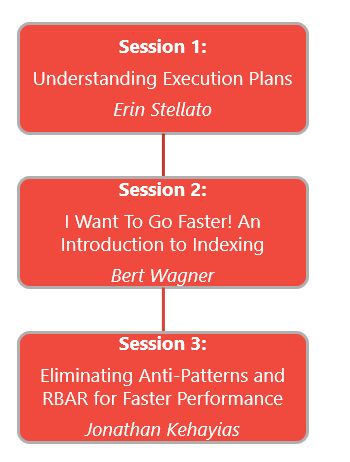
This year, we have what is called ‘Learning Paths’. These are guided pathways through sessions that target specific learning needs. Each ‘pathway’ is multiple sessions taught by multiple people. You have no obligation to follow a pathway to attend them but you would probably gain more if you did. For example, a ‘pathway’ on SQL Performance for the developer has 3 sessions as below.

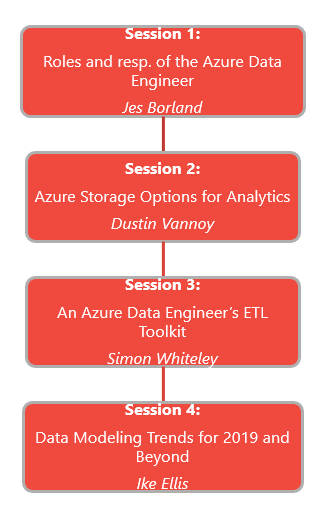
Another pathway on Becoming an Azure Data Engineer is as below.

The complete list of pathways is as below and you can find the content on PASS summit website.

  • AI for Everyone
  • Cloud Migration
  • Data Visualization & Storytelling
  • Linux for SQL Server Professionals
  • Communication for Technical Professionals
  • Data Security Pathway
  • SQL Performance for the Developer
  • Technical Leadership
  • Modernizing with SQL  Server 2019
  • Becoming an Azure Data Engineer

I hope you will find this method useful to enhance your learning. And do stop by at the bloggers table to say hello to me while you’re there!!

Temporal tables – list of errors with reasons

Last month I was fortunate to have my first ever article published on Simple-Talk, among the best quality website for sql server articles ever. During the process of writing this article I ran into several errors related to temporal tables that I have not seen before. Some of these are documented by Microsoft, some are fairly obvious to understand and others are not. Below I summarize the list of errors you can possibly run into if you are using this really cool feature.


Error MessageReason
ALTER TABLE only allows columns to be added that can contain nulls, or have a DEFAULT definition specified, or the column being added is an identity or timestamp column, or alternatively if none of the previous conditions are satisfied the table must be empty to allow addition of this column.Defaults have to be specified if using an existing table as a history table.
Msg 13523, Level 16, State 1, Line 62 Setting SYSTEM_VERSIONING to ON failed because table ” has ‘’ columns and table ‘WideWorldImporters.Sales.Region_History’ has ‘’ columns.History table and main table should have exactly the same structure.
Msg 13518, Level 16, State 1, Line 62 Setting SYSTEM_VERSIONING to ON failed because history table ‘’ has IDENTITY column specification. Consider dropping all IDENTITY column specifications and trying again.Columns with identity are disallowed on history table.
Msg 13575, Level 16, State 0, Line 2 ADD PERIOD FOR SYSTEM_TIME failed because table ” contains records where end of period is not equal to MAX datetime.  End date on table being versioned has a value that is not equal to the default specified. Update the table to make sure all end dates equal the maximum default.
Msg 13515, Level 16, State 1, Line 15 Setting SYSTEM_VERSIONING to ON failed because history table ‘’ has custom unique keys defined. Consider dropping all unique keys and trying again.    History table cannot have any primary keys defined. Remove primary keys.
Msg 13543, Level 16, State 0, Line 116 Setting SYSTEM_VERSIONING to ON failed because history table ” contains invalid records with end of period set to a value in the future.Data in history table is not following rules – all end date should be before start date for the corresponding main record, and less than current date.
Msg 13573, Level 16, State 0, Line 7 Setting SYSTEM_VERSIONING to ON failed because history table ” contains overlapping records.There are multiple records for the same record with overlapping start and end dates. The end date for the last row in the history table should match the start date for the active record in the parent table

PASS turns 20

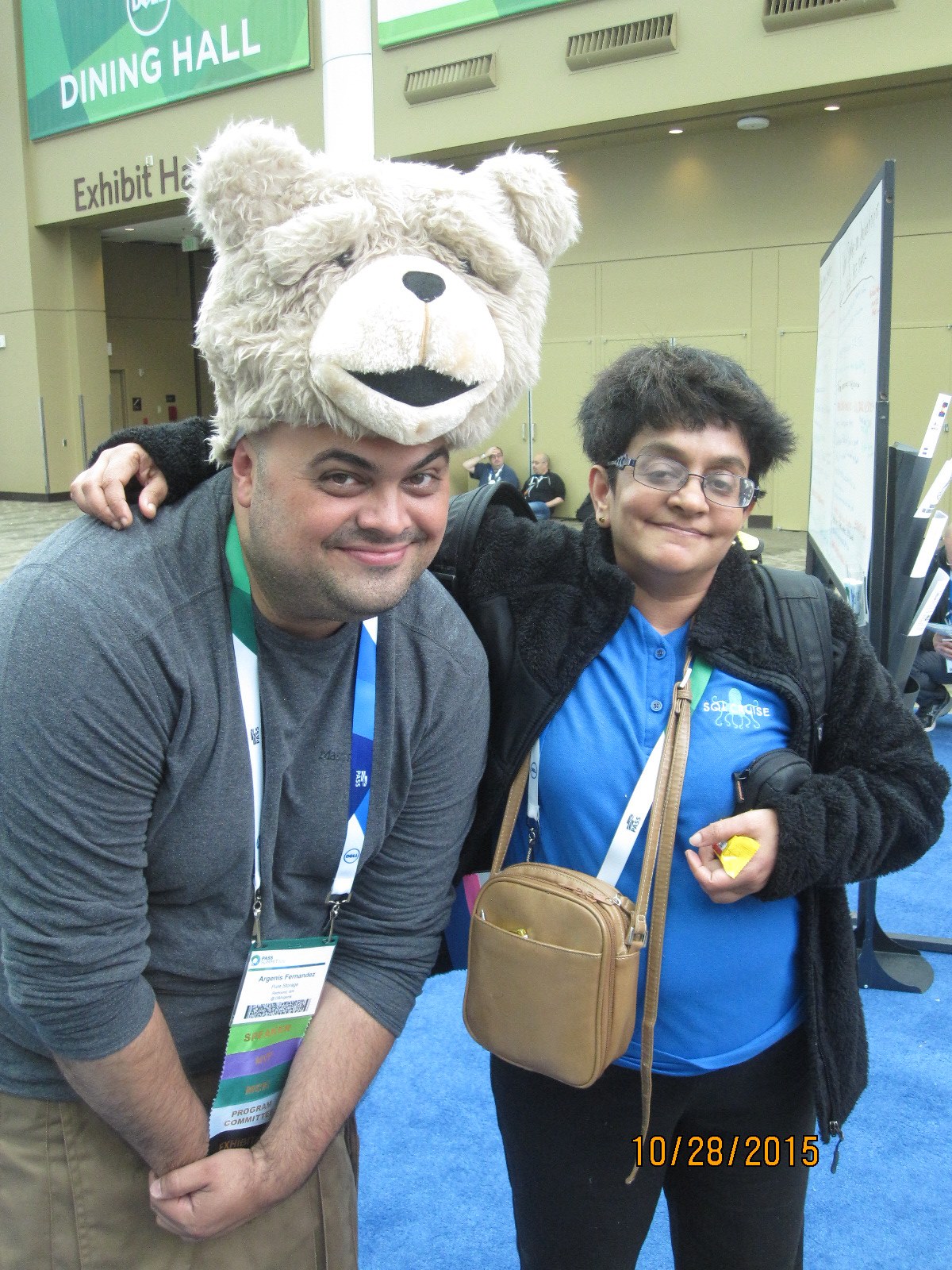
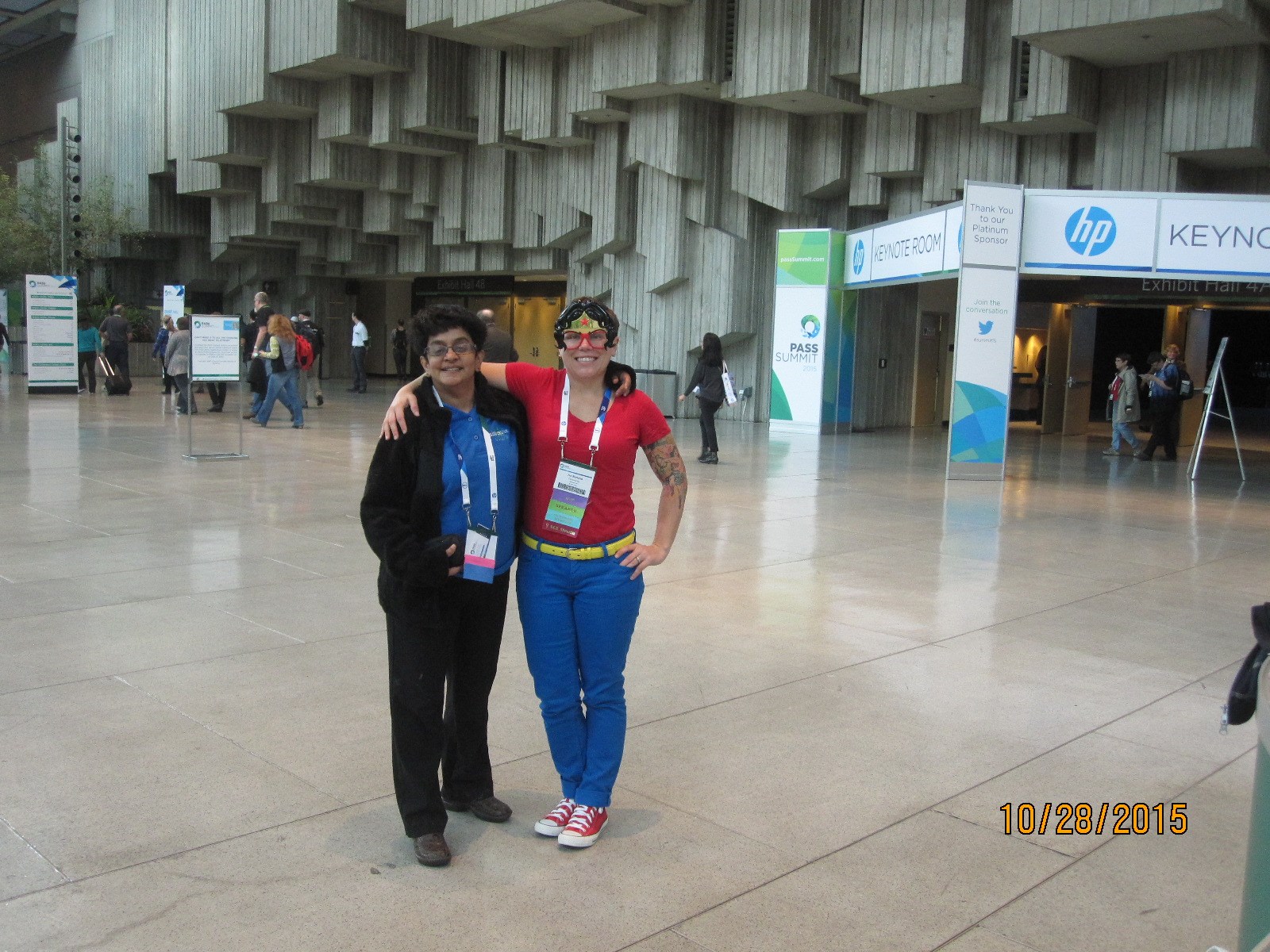
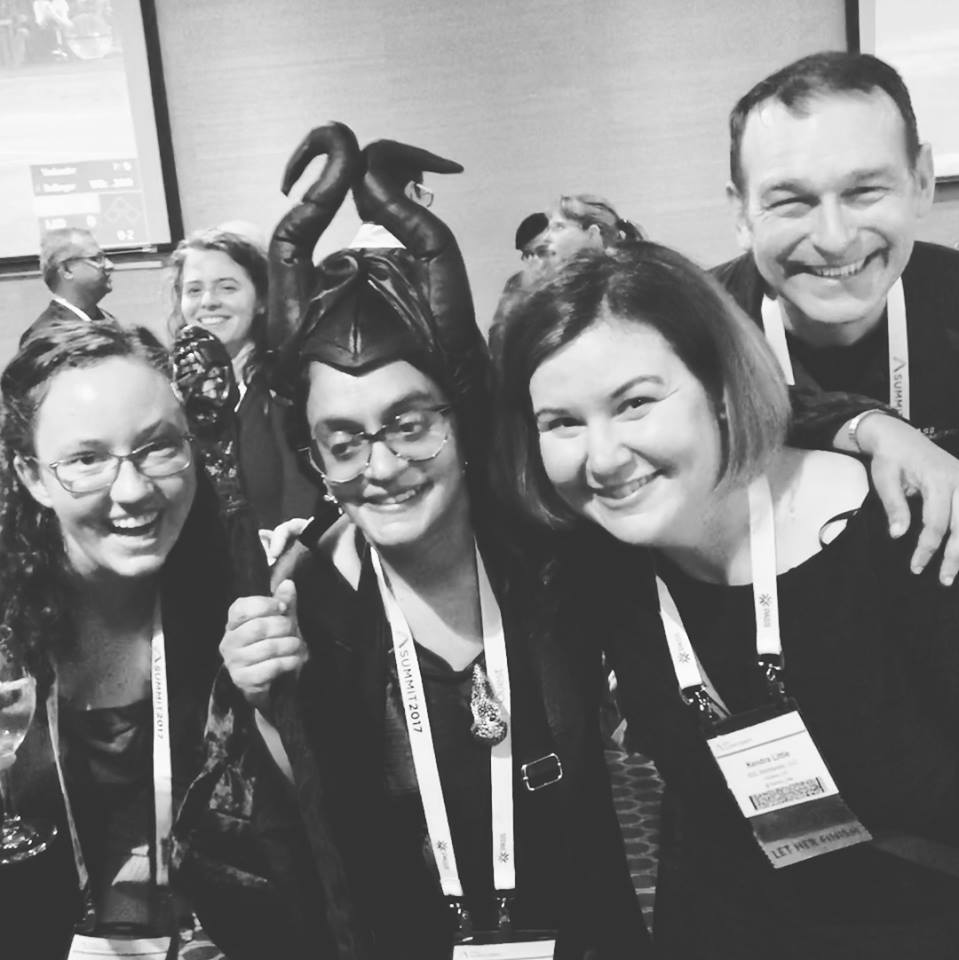
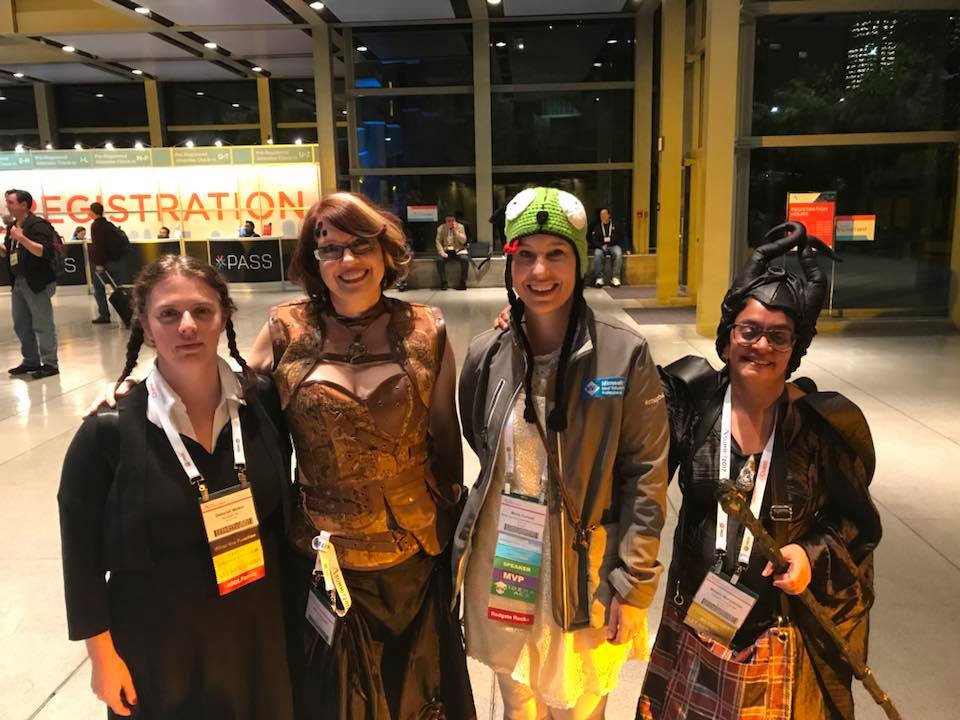
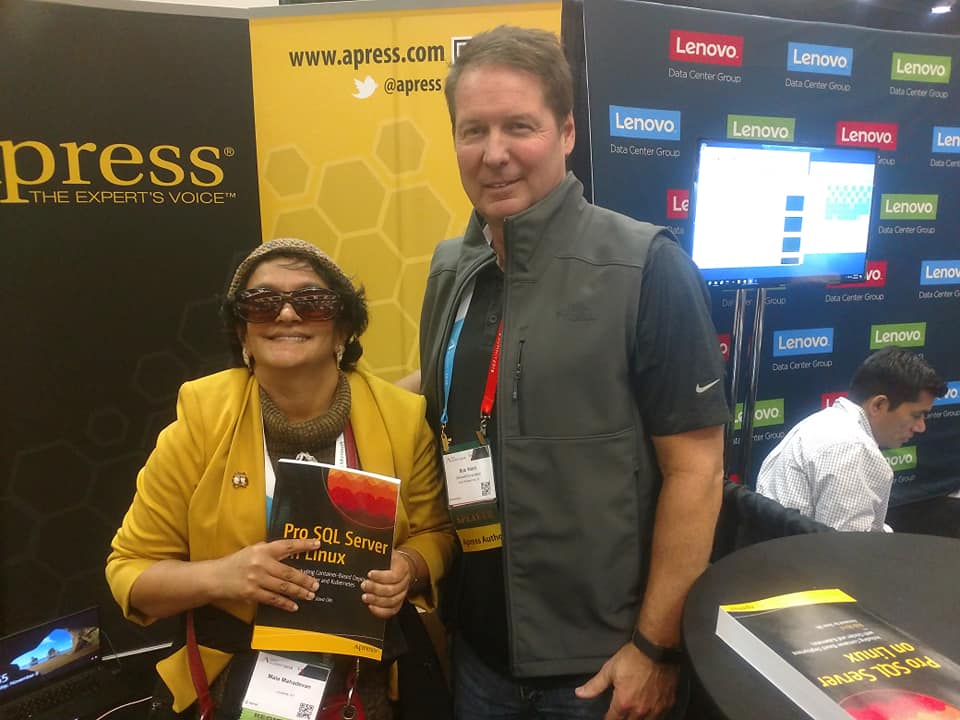
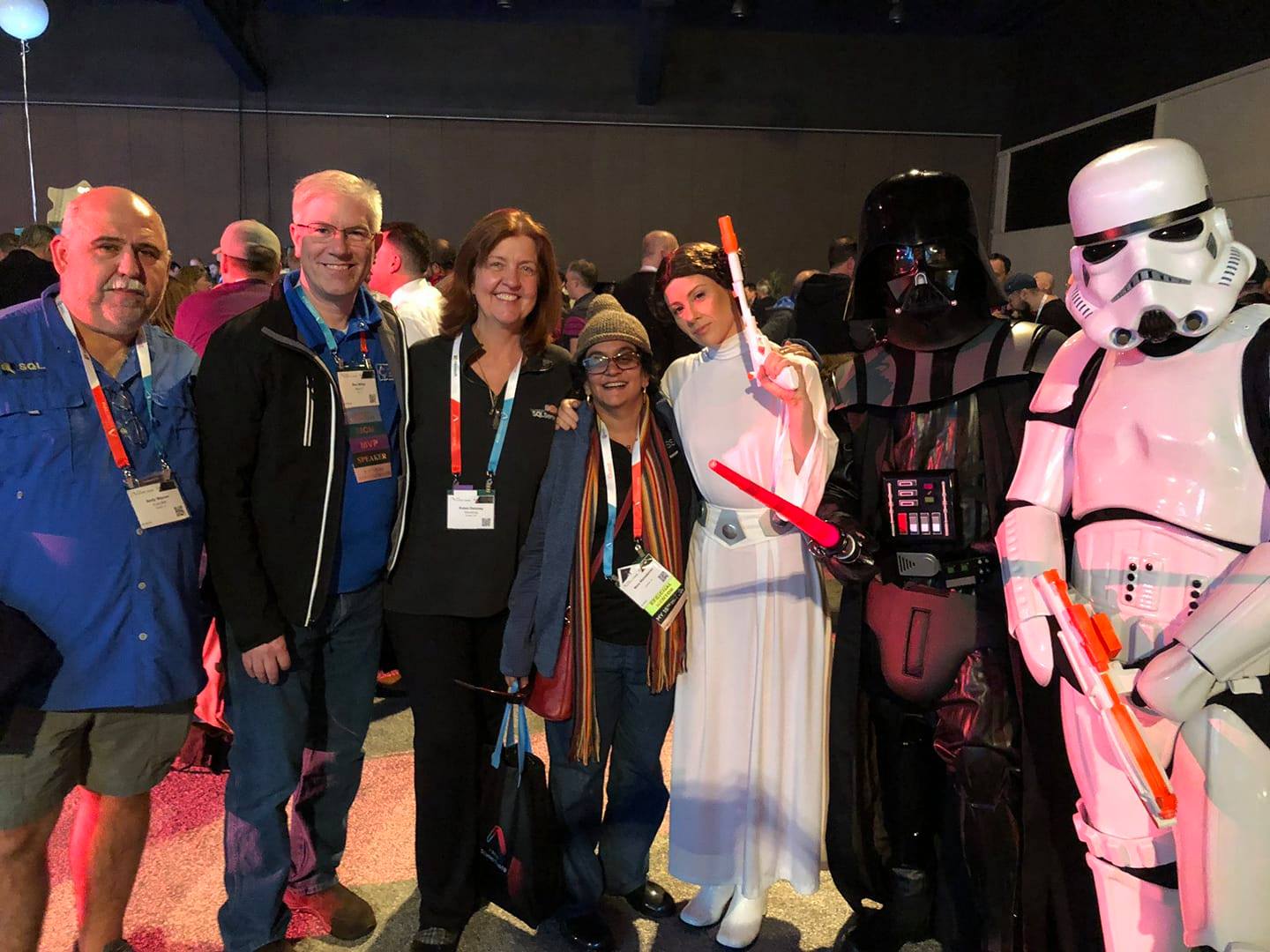
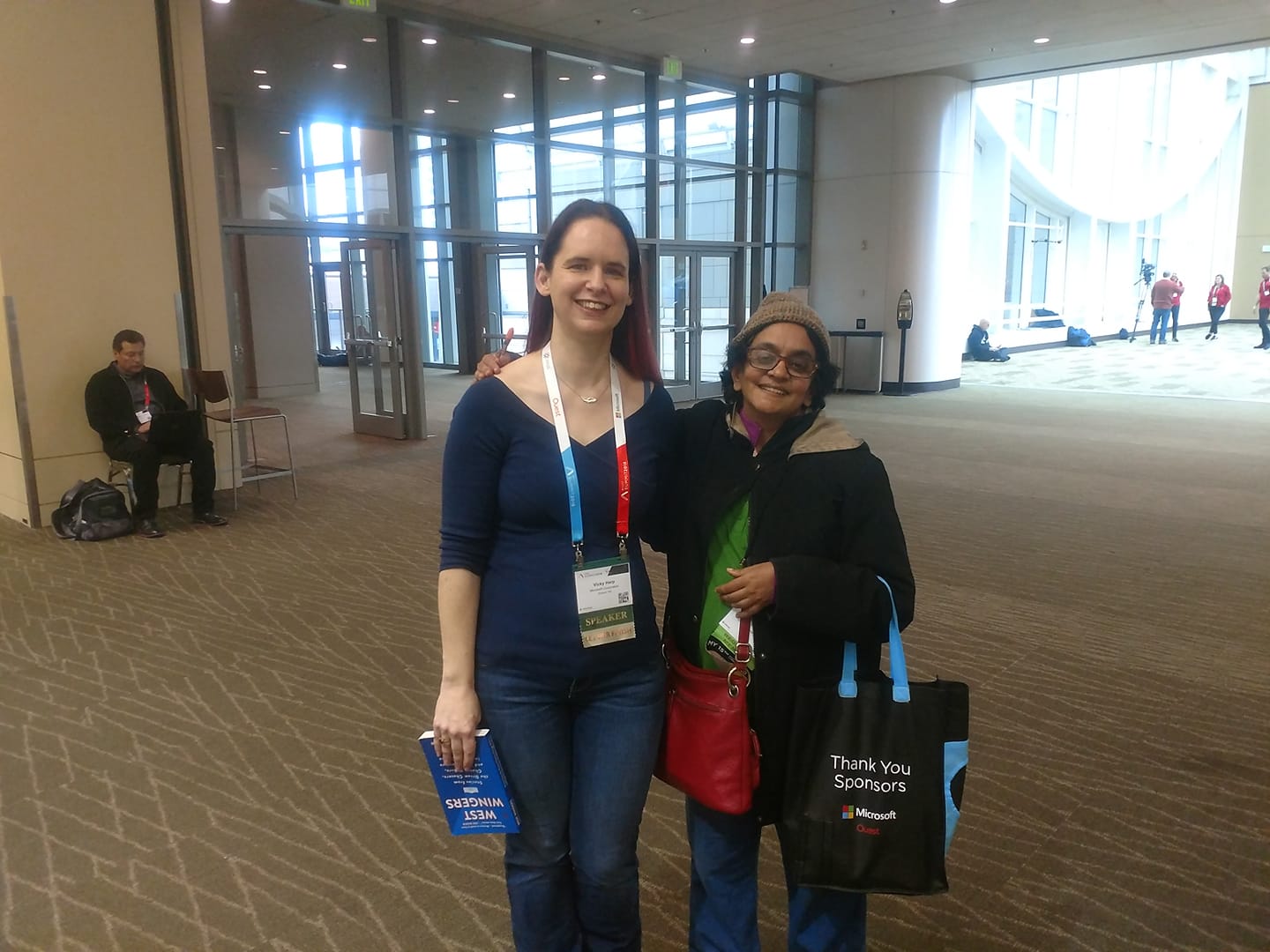
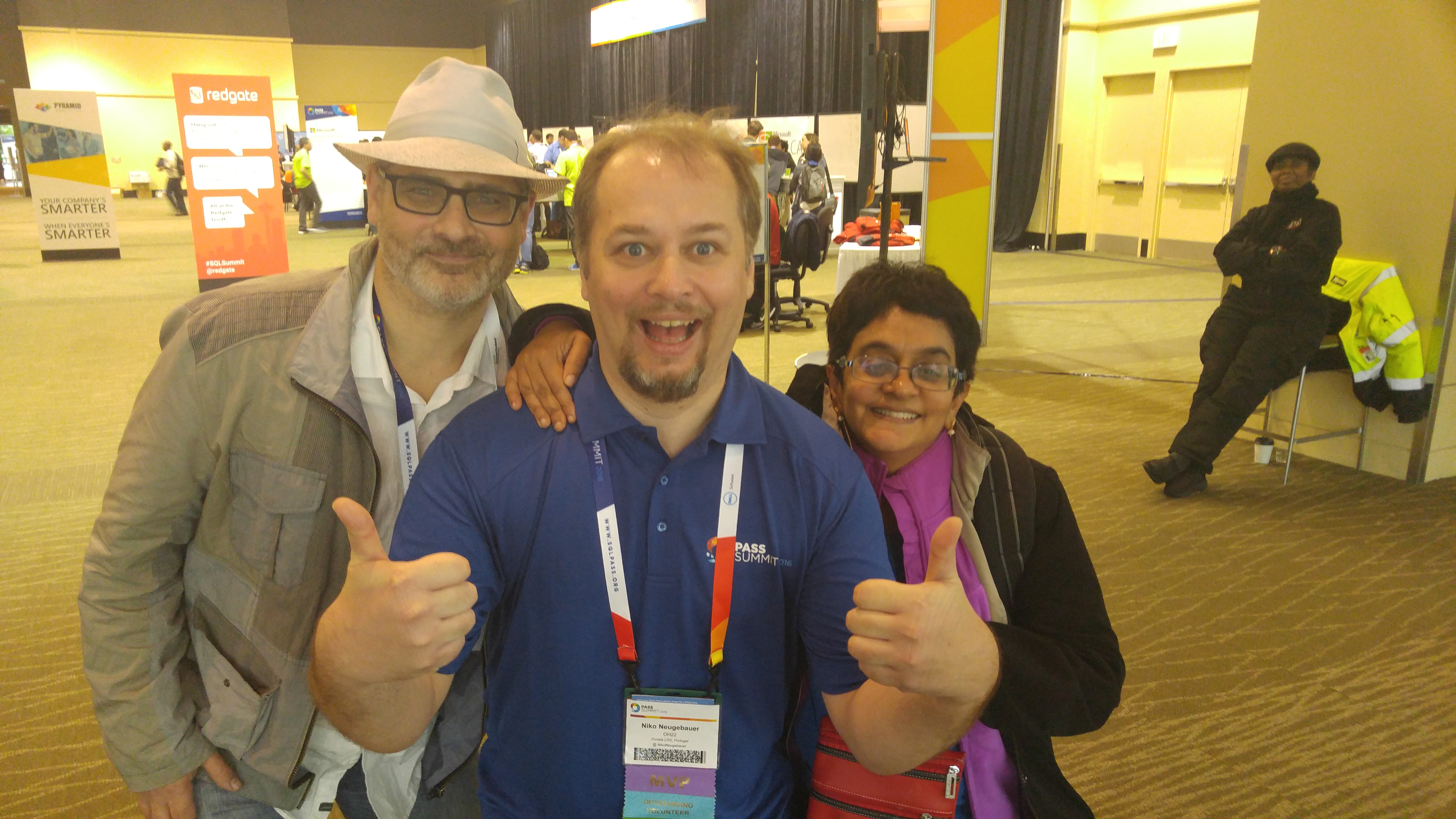
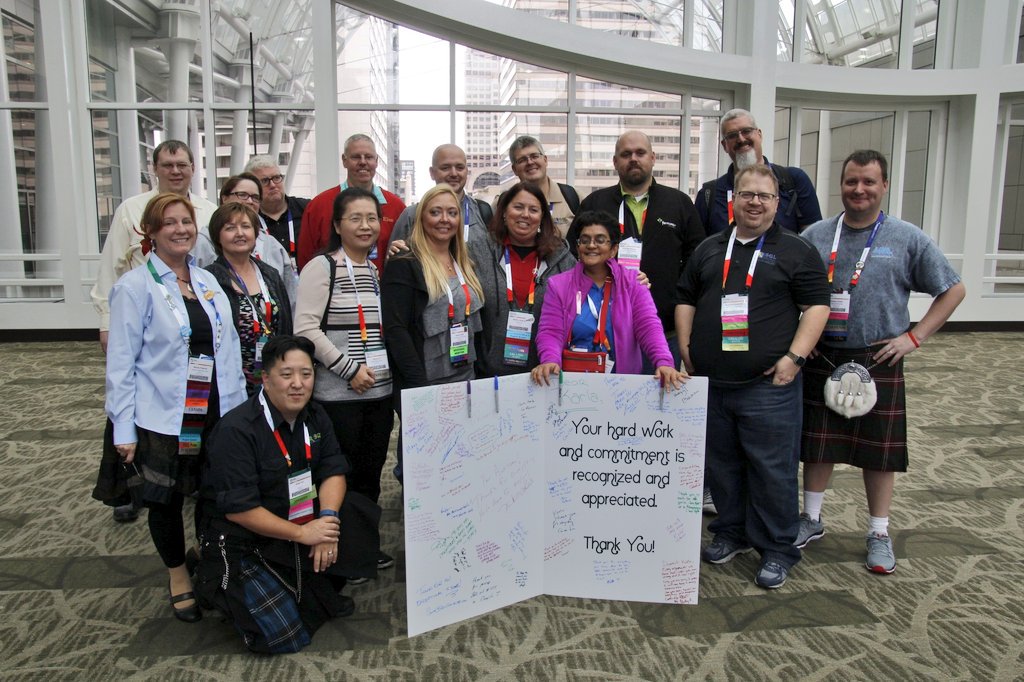
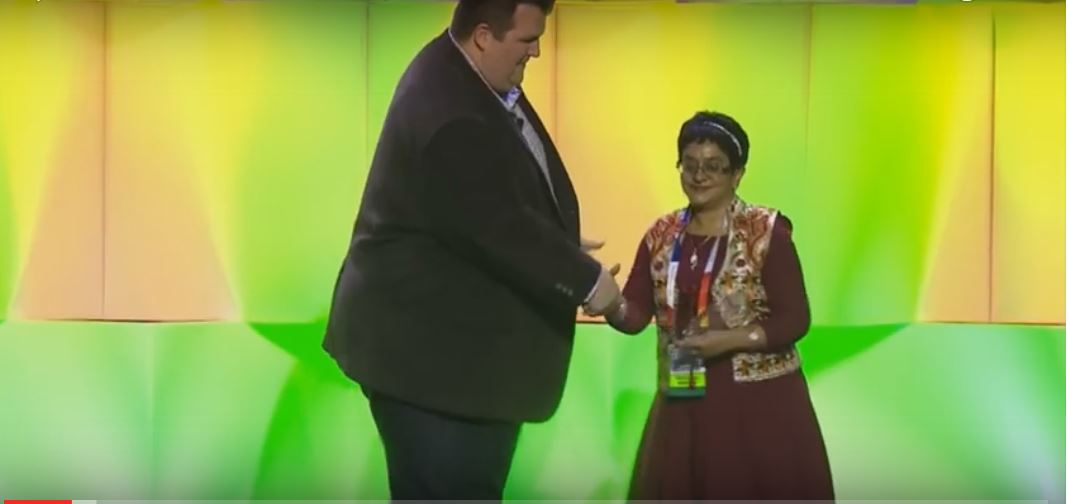
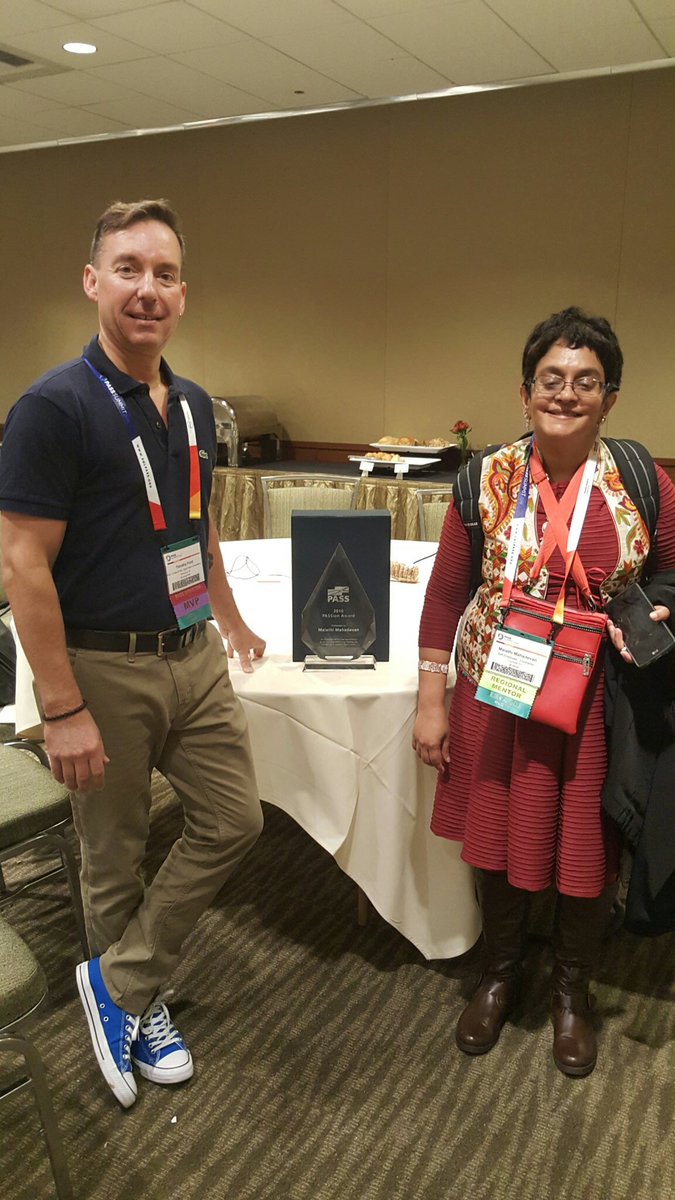
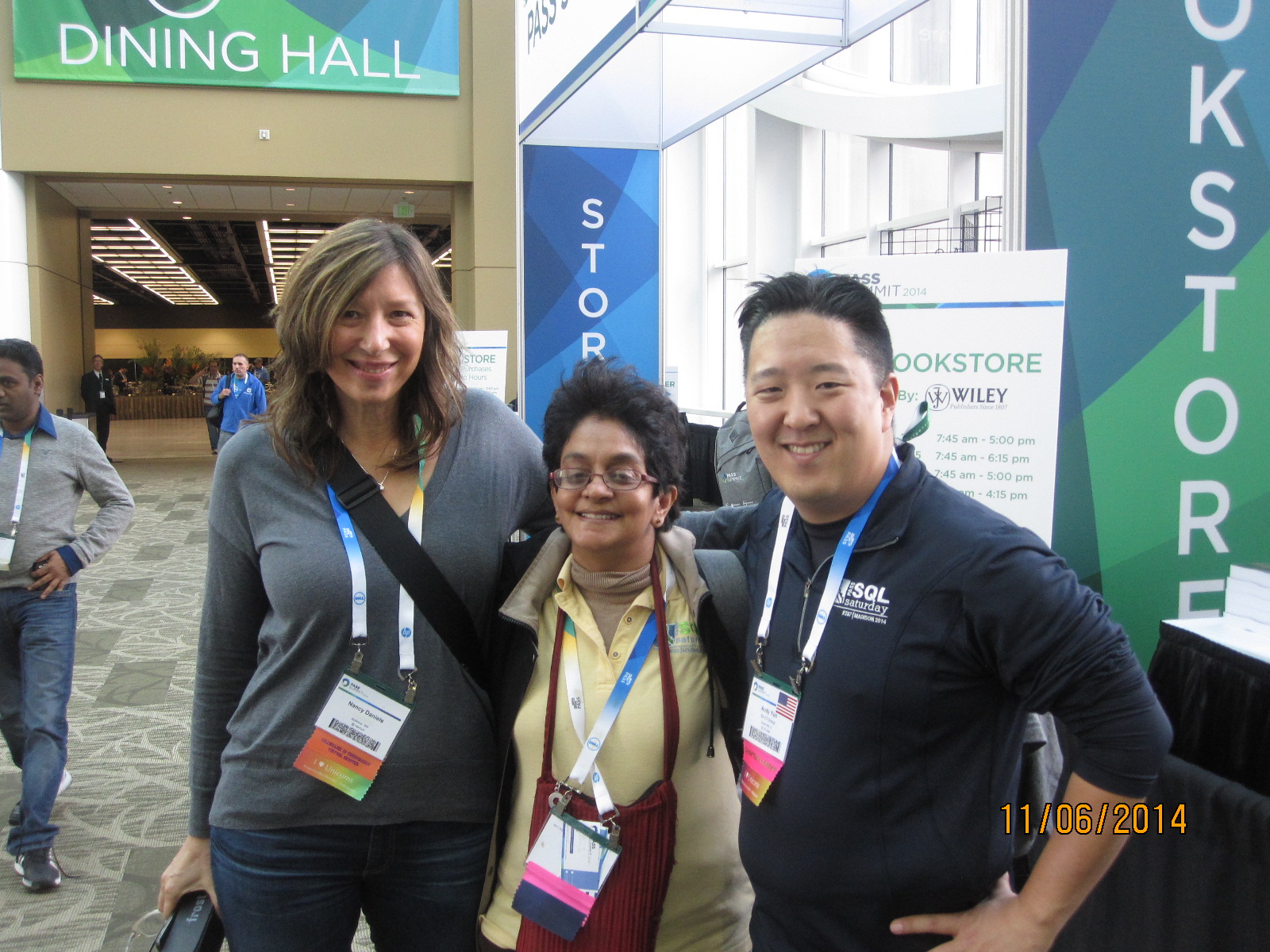
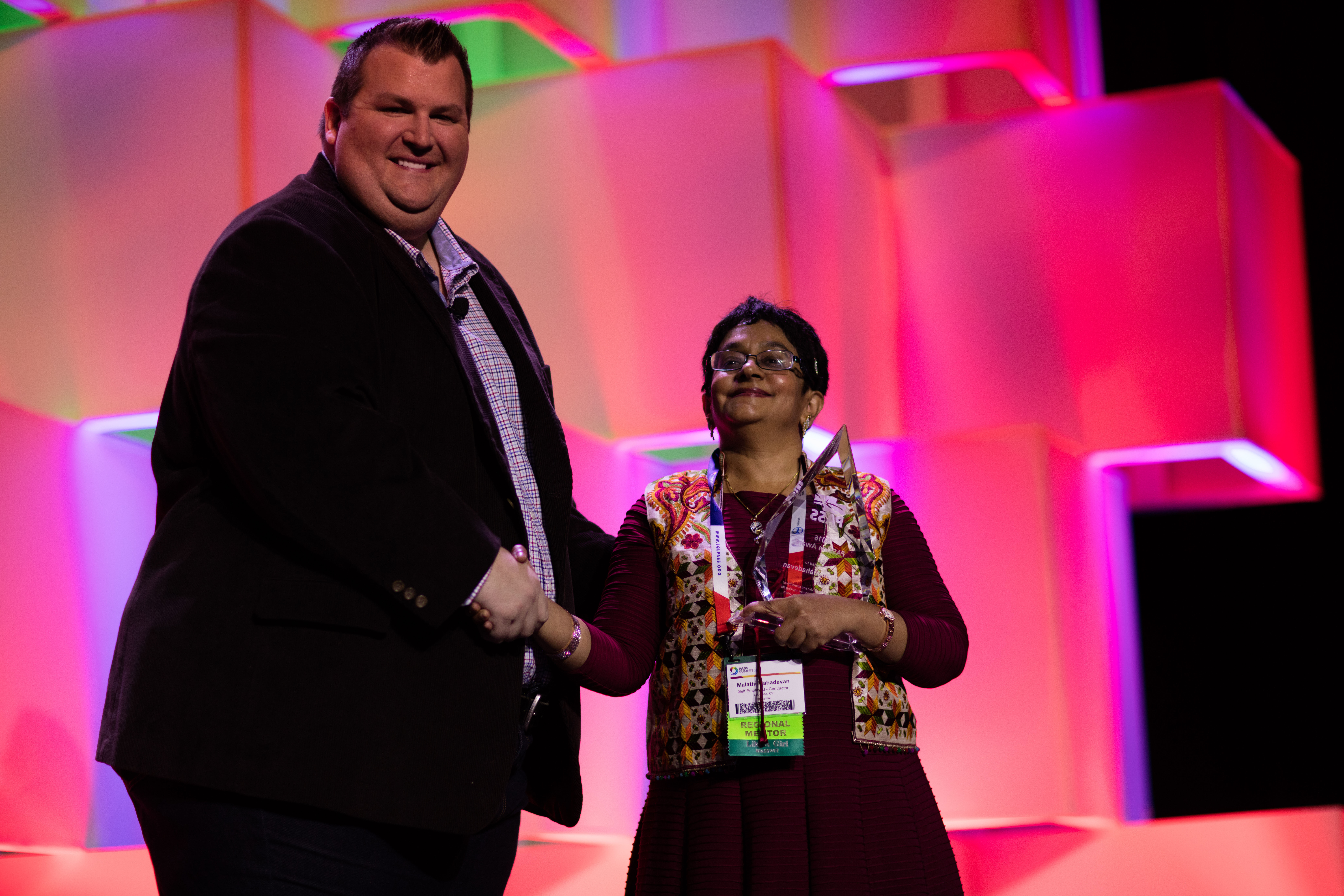
Its really hard to believe that its been 20 years since the start of the PASS organization – the volunteer run database education group that I am proud to be associated with. My association runs to 18 of those 20 years, and 16 of those have been with attending the PASS Summit. Sadly, I do not have any pictures to show for most of those years. But I have a few taken during the past five years. These pictures are memorable moments with friends, and turning points in my own career..how many people can claim both of those together? I do!! So below are some from my favorite collection. Thank you PASS, for the many memorable moments and look forward to more!!

WIT Panel for Women’s History Month

I cannot write this without stating some history. I have been part of PASS community since 1999. That is 21 years now. One of my favorite sub groups of PASS is WIT. 20 years ago WIT was restricted to one afternoon lunch session at the yearly summit. Majority panelists were white women. The discussions were good, but the lack of diversity always hit me hard. And we’d hear things like ‘after am done collecting more new shoes’ (don’t think that person is part of our community any more but she actually said it in response to someone who asked how they’d find time to learn after hours).

Fast forward 20 years later – WIT is doing a lot of great things. There is a monthly newsletter. There is a virtual group where with women speakers on technical subjects. Our books are promoted, and there are tweets promoting women speakers at sql saturdays. My own second book is in progress thanks to support from Kathi Kellenberger, who is one of the WIT team leads. 20 years ago, we didn’t even know there was such a thing as Women’s History month. But now we do. And tomorrow I am part of an awesome panel with the amazing likes of Kendra Little (@Kendra_Little), Lori Edwards (@loriedwards), Cathrine Wilhelmson(@cathrinew), Kellyn Pot’Vin-Gorman(@DBAKevlar), and Monica Rathbun (@SQLEspresso). The leaders of PASS WIT, Rie Irish (@IrishSQL) and Kathi Kellenberger (@auntkathi), will be leading the discussion.

Thank you, Rie and Kathi, for making WIT such an awesome cause and group to be part of. And a special thank you to Denny Cherry and Associates as well – for your active support and promotion of the cause. Now, if you’re reading this..time to register for tomorrow’s discussion, here!

Epic Life Quest – looking back

This will be my last post for the year. In this am going to look back on goals I set for myself over past two years, how well I’ve done, and what I plan to do in the year ahead.

The idea of epic life quest was started (in community) by Steve Jones and Brent Ozar – it is about writing down goals and calling yourself to account on how you met them every year. My first post on those lines is here. I wrote this in early 2017. I did not write one in 2018, and that was because last winter was a pretty chaotic time for me and was waiting for things to look in better shape before setting more goals for myself. This year things are looking better, and below is my summary of goals I set, and how I did.

2017:

1 Complete Microsoft Data Science Program and Diploma in Healthcare Analytics from UCDavis.

got the second one done partially. I could not complete the first due to lack of time. And it wasn’t as great as I thought it would be. It was expensive, quality wasn’t up to the mark and practical gains out of it were none. I learned from this is not to commit to expensive learning programs without fully understanding if they are worth it. 


2 Stick to blogging goals – one blog post per week, one contribution to sqlservercentral.com per two weeks.

I was able to keep up with this in 2017 and part of 2018. My blogging got rather irregular half way through 2018 because of a relocation and job change, I think I can excuse myself for that. Plan to pick this back up in 2019.

3 Keep up exercise goals of 10,00 steps per day and one yoga workout per week.

I am doing fine here and this will continue as a permanent goal.


4 Speak at local user group as often as I can (my limitations with travel do not allow me to speak at too many sql saturdays or out of town events)

I did not do good on this one. Partly because my job and other personal obligations left little time to even prepare a good talk, let alone present it. Also partly because I was in a very confused place on what to talk about. Things have cleared up a bit now.


5 Submit to speak at PASS speaker idol event.

This did not happen either,for same reasons as above. Hope to make it happen in 2019.


6 Hike the Grand Canyon with my sister, we are travelling companions and love to see places together.

YES! We made and hiked several other parks too in these two years. This will be an ongoing goal.


7 See two new countries atleast – Mexico with SQL Cruise, one more towards end of the year – remains undecided for now. But two countries it is.

YES! I saw two new countries – Mexico and Jamaica. 


8 Blog on books read so that I can understand the time I devote to reading and range I read in that time.

I did not get to blogging much on what I read but managed to read quite a few books. Also contemplated on reading strategy and this will be a different type of goal (not number based) in the days to come.


9 Get home renovation work done – am undecided on if I want to keep this condo or sell it, but either way, I’d have to get work done on it. Best if it got done this year, but involves considerable financial commitment that am not sure I can meet. As of now it looks doable for this year, but may move to next year if I have to reset goals.

YES! I also sold the home after renovation. This has also changed, don’t plan to own a home anytime soon. Too much money and effort maintaining it and very limiting in so many ways.

10 Increase collection of annotated classics by year end. This is an ongoing goal to build a library for retirement. The only books I buy in print are annotated ones or those with pictures. There are not many of those and my collection is upto 30-40% of what I need already. I keep adding to it @3-4 books a year.

I am doing good on this and don’t think this should be a yearly goal, more like a long term one. I got rid of many books which I thought I did not need in paper form at all.


10 Take a course on cartooning and short story writing – both of these are my pet hobbies and never had as much time for them as I’d like – this year would like to atleast take a course on each to deepen my love and interest.
This did not happen. Too many conflicting priorities. But I did get to writing my first book and plan to pursue writing seriously in the years to come.


2018:

1  Submit to speak at PASS Summit.
This did not happen for same reasons cited above. I do not plan on this being a goal until 2020.

2 Organize SQL Saturday #10 at Louisville (not clear how different this will be yet…).
YES! SQL Saturday Louisville #10 was a phenomenal success – handed over reins of running it to new team and finding other things to do with the time I spent on it.

3 Keep up same goals for exercising.
YES! This is going on well.


4 Visit one new country with my sister – am looking at Bali/Indonesia now.

We visited three national parks as opposed to one originally planned (Zion and Quinault Rainforest). So this was  not met in theory but substituted with other valid fun things to do.

5 Visit one more new country on SQLCruise, hopefully, or on my own. Either way, I do it.
YES! I visited Mexico in 2017 and Jamaica in 2018 with SQLCruise.

6  Biggie – Pay off my mortgage. Yes, this is important and am not that far away. The only thing that keeps me from it is a bit undecided on how long I can live here with job opportunities being what they are. But I will assume those will be the same and in that case, the house will be ready to be paid off in 2018.
The house was sold instead of being paid off as I relocated to another state. I consider this goal as met although in a different way.

7 Do actual analytics work – by this time I will have a reasonable understanding of R/SAS/Microsoft Data science related skills, and expect it to take me to the next level professionally.

This was a bad goal to set, to begin with. My interviewing experience told me that very few places are doing analytics seriously to begin with, and those few places are looking for ph ds and people with a decade or more of experience to fill the role. I was able to get off pager carrying DBA role and get into doing more of data architect/coding type of work, which was what I wanted to do. Future goals will not be so specific, instead focus on what direction I want to go and where am going, instead of landing actual work which will happen on its own with time.


Goals for 2019 are as below:
1 Finish off Microsoft Big Data Certification. I am already working my way through it. I will devote every saturday evening to it and hope to get it done.
2 Continue with watching pluralsight/pass summit videos and listening to podcasts whenever time permits.
3 Complete writing second book I have committed to. 
4 Read two pages of a tech book every day evening with tea. I am intentionally keeping this goal very small and doable. This is also based on a few experiences with reading.
I do not have to read a tech book page-to-page.
There are parts that are more interesting and useful than others. 
I need to keep notes to recall/reinforce what I read. 
I will be resuming reading with this in mind. 
5 Blog @ one post every two weeks – again, scaled down from one post per week and trying to keep it modest and consistent. 
6 I am planning on 4 tech events – SQL Saturdays at Raleigh, neighboring Charlotte, Louisville and then the PASS Summit towards end of the year. 

On personal front – 
1 I plan to continue with hiking and exploring national parks. I am planning a trip in Spring/early summer with some visiting family members.
I do not think an overseas trip will materialise this year.
2 I plan to continue with healthy eating and exercising goals. 

That is my rather simple goal list. If there is one lesson i have learned with writing this down is that – it helps improve my personal commitment level, it helps keeping the list small and simple. I think with a short list, commitment and simplicity, we can all get there. Happy 2019!